About this template
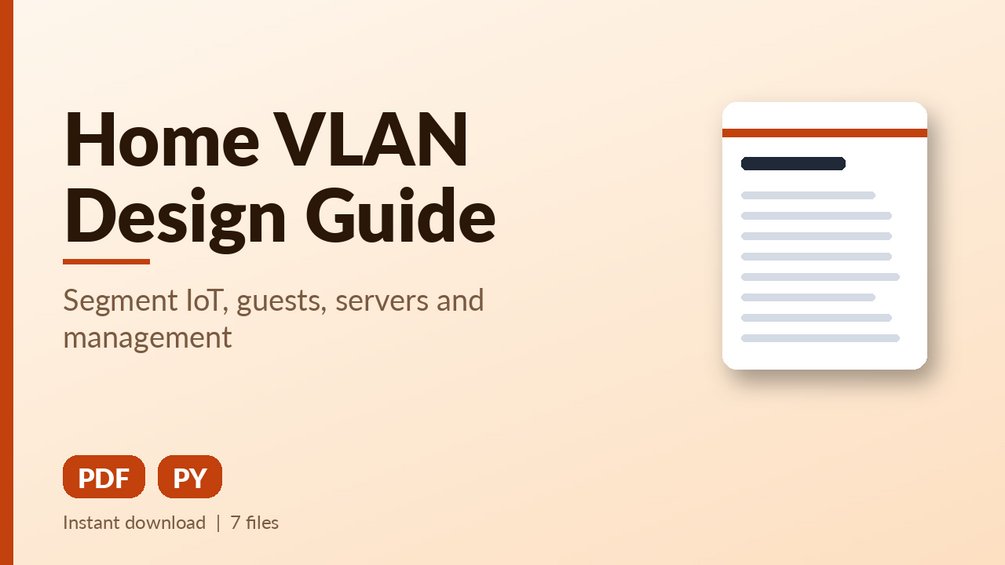
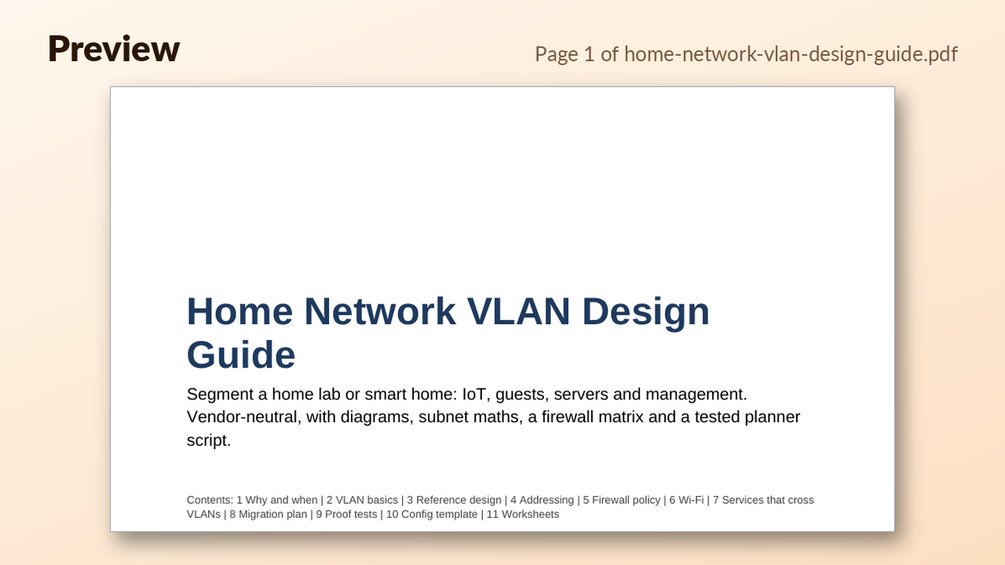
Vendor-neutral 10-page guide with diagrams, subnet maths, firewall matrix, migration plan and a tested subnet planner script.
What you get: 10-page PDF with topology, 802.1Q tag and Wi-Fi diagrams, six-VLAN reference design, CIDR sizing table, firewall allow/deny matrix, DHCP/DNS/mDNS cross-VLAN notes, migration plan, proof tests, pseudo-config and blank worksheets; Python vlan_planner.py (14 tests) with example plan and CSV outputs.
Who it is for: Homelabbers and small-office admins who want to separate untrusted devices without learning one vendor's menus.
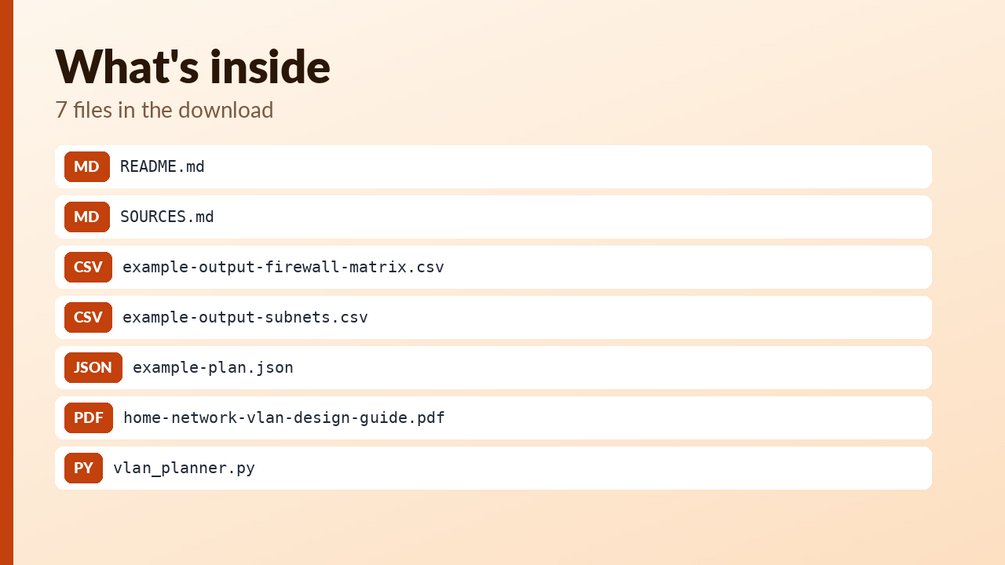
Files:
- `example-output-firewall-matrix.csv`
- `example-output-subnets.csv`
- `example-plan.json`
- `home-network-vlan-design-guide.pdf`
- `vlan_planner.py`
How to use: open the EXAMPLE file first to see every formula working (yellow cells = your inputs, blue-grey = formulas); then use the BLANK file for your own data. See Start_here sheet / included notes. Test examples are in the Tests sheet or `--selftest` where included.
What it is NOT: Not a configuration for a specific product, not a guarantee of security, and no exploit content.
Questions
What file types do I get?
A 10-page PDF guide (home-network-vlan-design-guide.pdf) and a Python script (vlan_planner.py). The download also includes README.md, SOURCES.md, example-plan.json, and two example CSV outputs (subnets and firewall matrix).
Is it specific to one router or switch brand?
No. It is vendor-neutral and uses pseudo-config rather than any one product's settings, so you will need to translate the design into your own equipment's menus.
How do I get started?
Read the PDF for the six-VLAN reference design, CIDR sizing table and firewall matrix. Then try vlan_planner.py with the included example-plan.json to see the example outputs, and fill in the blank worksheets for your own network. The script comes with 14 tests.